
I’ve lost count of how many people tell me their fish died within the first month.
It’s not your fault. Nobody teaches you that fish care is really about water care.
Most new fish owners think it’s simple. Buy a bowl, add water, drop in some fish. But that’s exactly why so many fish don’t make it past week two.
Here’s what actually matters: your aquarium is a living ecosystem. The water chemistry, the bacteria, the balance between waste and filtration. Get these wrong and your fish suffer.
I’ve been keeping fish for over a decade. I’ve managed everything from single betta setups to complex community tanks with dozens of species. I’ve made the mistakes so you don’t have to.
This guide will show you how to set up and maintain an aquarium that actually works. Not the myths you find in big box pet stores. Real principles that keep fish healthy.
You’ll learn the foundational steps that most people skip. The ones that make the difference between fish that barely survive and fish that actually thrive.
At llblogpet, we focus on practical advice that works in real homes with real pets.
No complicated jargon. Just the core knowledge you need to keep your fish alive and healthy for years.
The Foundation: Your Fish’s World Before They Arrive
Let me tell you something most pet stores won’t.
That tiny bowl with a single goldfish? It’s setting you up to fail.
I see it all the time here in Longview. Someone gets excited about keeping fish, buys a small tank, and within weeks their fish are struggling or dead. Then they think they’re bad at this.
But it’s not you. It’s bad information.
Tank Size Matters (More Than You Think)
You’ve probably heard the old rule: one inch of fish per gallon of water.
Forget it. That rule is outdated and honestly pretty misleading.
Here’s what actually happens. Smaller tanks have wild swings in water quality. The temperature drops two degrees and your fish feel it immediately. Ammonia builds up faster. One overfeeding session can crash the whole system.
A 10-gallon tank or larger gives you breathing room. The water stays stable. You have time to catch problems before they become disasters.
Yes, bigger tanks cost more upfront. But they’re way easier to maintain, especially when you’re just starting out.
The Most Critical Step: The Nitrogen Cycle
This is where most beginners quit before they even start.
The nitrogen cycle sounds complicated. It’s not. Your fish produce waste that turns into ammonia. Ammonia is toxic. Beneficial bacteria convert that ammonia into nitrite (also toxic), then into nitrate (much less toxic).
You need those bacteria established before fish arrive.
Here’s how you do a fishless cycle. Add pure ammonia to your empty tank (about 2-4 ppm). Wait. Test your water daily. You’ll see ammonia levels drop as bacteria grow, then nitrite will spike and fall. When you can add ammonia and it converts to nitrate within 24 hours, you’re ready for fish.
This takes three to six weeks. I know that feels like forever when you’re excited to get started.
But skipping this step? That’s how fish die in the first week.
Essential Equipment Checklist
You don’t need fancy gear. You need the right gear.
Start with a filter. Hang-on-back filters work great for most setups. Sponge filters are gentler for smaller or more delicate fish. Your filter should process the tank volume at least four times per hour.
Get an adjustable heater. Most tropical fish need water between 76-80°F. A good heater keeps that steady.
Add a thermometer so you actually know what’s happening in there (those stick-on strips work fine).
Finally, grab a water testing kit. The API Master Test Kit is what I use. You need to test for ammonia, nitrite, nitrate, and pH. Strips are easier but less accurate. Liquid tests take more time but give you real numbers. When setting up your aquarium, it’s essential to follow the best practices, and for additional tips, I highly recommend checking out the Pet Advice Llblogpet for insights on maintaining optimal water conditions. When setting up your aquarium, it’s essential to follow the best practices, and for those seeking additional guidance on maintaining a healthy environment for your aquatic pets, I recommend checking out the insightful “Pet Advice Llblogpet” for expert tips and troubleshooting advice.
Look, I get it. This feels like a lot before you even have fish. Some people say you’re overthinking it and should just jump in.
But here’s the thing. Following solid pet advice llblogpet means doing the boring prep work first. Because watching your fish thrive instead of struggle? That’s worth the wait.
Choosing Your Aquatic Residents: Setting Up for Success
You know what drives me crazy?
Walking into a pet store and watching someone buy a goldfish in a bowl for their kid. The employee doesn’t say a word about how that fish will outgrow the bowl in months or die from ammonia poisoning first.
It happens every single day.
Here’s the truth about starting with fish. Some species will forgive your beginner mistakes. Others won’t make it past week two no matter what you do.
Start with fish that actually want to live.
Bettas are solid if you give them a real setup (and I mean a proper 5+ gallon tank with a heater and filter, not those sad little cups). Platies and guppies are nearly impossible to kill. Neon tetras look great in groups. Corydoras catfish clean up the bottom and they’re fun to watch.
These fish can handle the learning curve while you figure things out.
But some fish? They’re set up to fail from day one.
Goldfish get massive and produce waste like a small factory. They need huge tanks or ponds, not bowls. Common plecos turn into literal tank busters that outgrow most home aquariums. Oscar fish will terrorize everything else in your tank and need way more space than beginners realize.
(I’ve seen too many stunted plecos surrendered to fish stores because someone thought they’d stay small.)
The stores won’t always tell you this stuff. They want the sale.
Now here’s something most beginners skip that’ll save you serious headaches later.
Quarantine every new fish.
I mean it. Set up a separate tank and keep new arrivals there for 2 to 4 weeks before adding them to your main aquarium. Check out our infoguide for birds llblogpet for more quarantine best practices that apply across different pets.
This one step prevents you from introducing diseases that wipe out your entire tank. I’ve watched people lose fish they’d kept for years because they skipped quarantine on one new addition.
It’s frustrating to wait when you’re excited about new fish. But it’s way more frustrating to treat a whole tank for ich or worse.
The Rhythm of Care: Your Daily, Weekly, and Monthly Checklist
Most fish care guides dump a massive list on you and call it a day.
They don’t tell you what actually matters or how long things take. I expand on this with real examples in Llblogpet Advice for Fish.
I’m going to break this down differently. Because here’s what I’ve learned after years of keeping tanks: consistency beats perfection every time.
Some aquarists will tell you that you need to spend hours every week maintaining your tank. They’ll say anything less means you’re cutting corners.
But that’s not realistic for most people. And honestly? It’s not even necessary.
Your Daily Routine (5 Minutes)
Look at your fish. Really look at them. Are they swimming normally? Any torn fins or weird spots?
Feed once or twice a day using the two-minute rule. If food is still floating after two minutes, you fed too much. For those looking to optimize their feline feeding schedule, the Infoguide for Cats Llblogpet emphasizes the importance of the two-minute rule to ensure your cat isn’t overfed and remains healthy. For those navigating the complexities of feline nutrition, the Infoguide for Cats Llblogpet serves as an invaluable resource, highlighting the two-minute rule to help cat owners avoid overfeeding and promote healthier eating habits.
Scoop out anything they didn’t eat. Check your thermometer.
That’s it.
Weekly Tasks (30-60 Minutes)
This is where the real work happens.
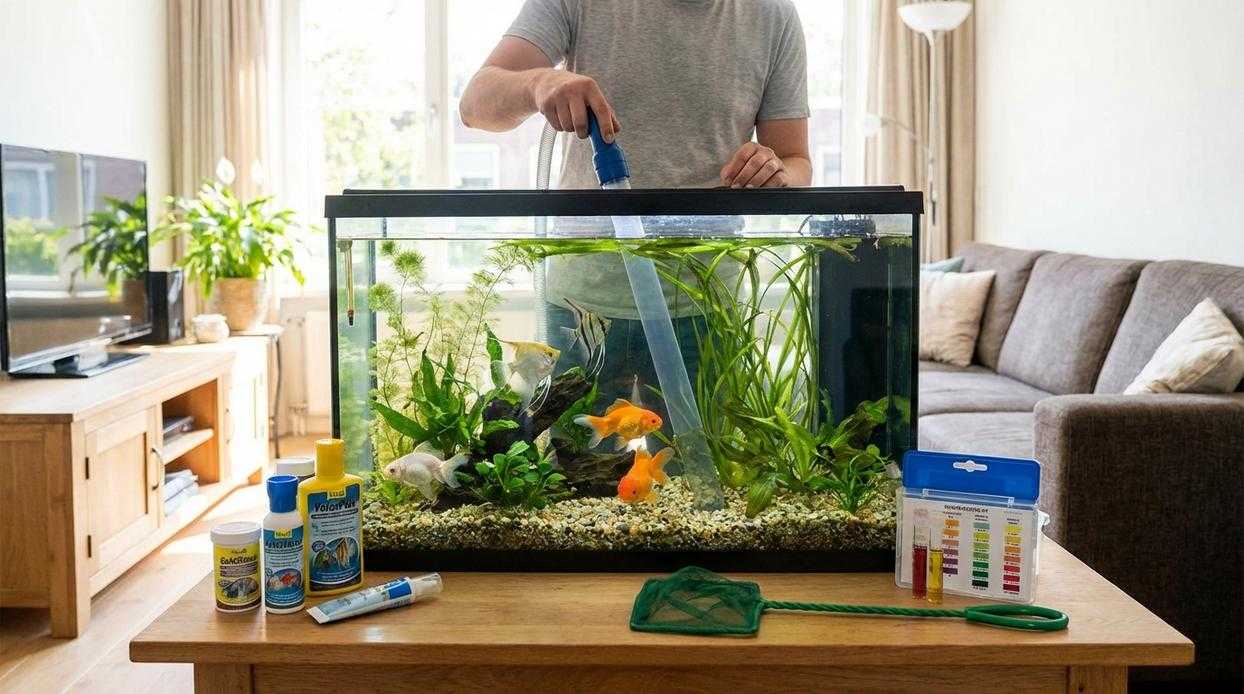
Do a 25% water change with your gravel vacuum. Match the temperature of your new water to your tank. Use dechlorinator (tap water will kill your beneficial bacteria).
Test your water parameters. Write down ammonia, nitrite, and nitrate levels. I keep a notebook next to my tank because memory is unreliable.
Scrape the glass if algae is building up.
Monthly Maintenance (15 Minutes)
Time to clean your filter media.
Here’s the part most beginners get wrong. Never rinse your filter sponges or ceramic rings under tap water. The chlorine kills all the good bacteria you’ve spent weeks growing.
Use the old tank water you just removed during your water change. Swish the media around in there.
And whatever you do, don’t replace everything at once. Your filter is home to the bacteria that keeps your fish alive (that’s your biological filtration working).
The llblogpet advice for fish is simple: build these tasks into your routine until they become automatic. Miss a day? Don’t panic. Just get back on track.
Your fish don’t need perfect. They need consistent.
Troubleshooting 101: Reading the Signs
Your fish tank looks off and you’re not sure why.
I remember staring at my first aquarium thinking the cloudy water meant I’d messed up everything. Turns out I just needed to read what the tank was telling me.
Cloudy water comes in two flavors.
Milky white usually means bacterial bloom. It happens in new tanks when beneficial bacteria are multiplying like crazy. It looks bad but it’s actually normal (and it clears up on its own in a week or two).
Green water? That’s algae. Too much light or nutrients and you’ve got a mini pond situation.
Watch for these disease signs.
Ich shows up as tiny white spots that look like someone sprinkled salt on your fish. Fin rot makes fins look ragged and frayed at the edges like old fabric.
Before you treat anything, check your water quality first. Most diseases pop up because something’s wrong with the water.
Your fish’s behavior tells you everything.
A fish gasping at the surface means low oxygen or ammonia poisoning. Hiding constantly? Could be stress from tank mates or poor water conditions.
I learned this the hard way when my betta spent three days behind the filter. Turned out my ammonia levels were through the roof. After my betta’s scare behind the filter due to high ammonia levels, I realized the importance of having a solid resource like the Infoguide for Birds Llblogpet to help navigate the complexities of aquatic pet care. After my betta’s scare behind the filter due to high ammonia levels, I realized the importance of having a solid resource like the Infoguide for Birds Llblogpet to help navigate the complexities of aquatic care and ensure a safe environment for my fish.
For more pet care guidance, check out our Infoguide for Cats Llblogpet.
Pro tip: Keep a notebook of your fish’s normal behavior so you’ll spot changes faster.
From Fishkeeper to Ecosystem Manager
You now understand what it takes to keep fish alive and healthy.
It’s not about luck. It’s about creating a stable environment where your fish can actually thrive.
Most people lose fish because they skip the basics. They don’t cycle their tank properly or they overstock too fast. The water chemistry crashes and the fish pay the price.
That frustration ends when you start thinking like an ecosystem manager instead of just a fishkeeper.
The nitrogen cycle is your foundation. Consistent maintenance keeps things stable. Proper stocking prevents problems before they start.
These aren’t complicated concepts. They just require patience and attention.
Here’s what you need to do: Start by cycling your tank the right way. Don’t rush it. Let the beneficial bacteria establish themselves before you add fish.
llblogpet advice for fish: A properly cycled tank is the difference between watching your fish struggle and watching them flourish.
Once you nail that first step, everything else gets easier.
You’ll be building an underwater world that lasts for years, not weeks.
 Zyvaris Vandell writes the kind of health and nutrition for pets content that people actually send to each other. Not because it's flashy or controversial, but because it's the sort of thing where you read it and immediately think of three people who need to see it. Zyvaris has a talent for identifying the questions that a lot of people have but haven't quite figured out how to articulate yet — and then answering them properly.
They covers a lot of ground: Health and Nutrition for Pets, Pet Care Tips and Advice, Pet Product Reviews, and plenty of adjacent territory that doesn't always get treated with the same seriousness. The consistency across all of it is a certain kind of respect for the reader. Zyvaris doesn't assume people are stupid, and they doesn't assume they know everything either. They writes for someone who is genuinely trying to figure something out — because that's usually who's actually reading. That assumption shapes everything from how they structures an explanation to how much background they includes before getting to the point.
Beyond the practical stuff, there's something in Zyvaris's writing that reflects a real investment in the subject — not performed enthusiasm, but the kind of sustained interest that produces insight over time. They has been paying attention to health and nutrition for pets long enough that they notices things a more casual observer would miss. That depth shows up in the work in ways that are hard to fake.
Zyvaris Vandell writes the kind of health and nutrition for pets content that people actually send to each other. Not because it's flashy or controversial, but because it's the sort of thing where you read it and immediately think of three people who need to see it. Zyvaris has a talent for identifying the questions that a lot of people have but haven't quite figured out how to articulate yet — and then answering them properly.
They covers a lot of ground: Health and Nutrition for Pets, Pet Care Tips and Advice, Pet Product Reviews, and plenty of adjacent territory that doesn't always get treated with the same seriousness. The consistency across all of it is a certain kind of respect for the reader. Zyvaris doesn't assume people are stupid, and they doesn't assume they know everything either. They writes for someone who is genuinely trying to figure something out — because that's usually who's actually reading. That assumption shapes everything from how they structures an explanation to how much background they includes before getting to the point.
Beyond the practical stuff, there's something in Zyvaris's writing that reflects a real investment in the subject — not performed enthusiasm, but the kind of sustained interest that produces insight over time. They has been paying attention to health and nutrition for pets long enough that they notices things a more casual observer would miss. That depth shows up in the work in ways that are hard to fake.