
I’ve seen too many dog owners second-guess themselves at 2 AM, wondering if they’re doing enough for their pup.
You feed them. You walk them. But there’s this nagging feeling that you might be missing something important.
Here’s the truth: caring for a dog goes beyond the basics, but it doesn’t have to be complicated.
I put together this guide because I kept hearing the same questions from pet parents. Am I feeding them right? Is this behavior normal? How do I know if they’re actually happy?
This article covers the five core pillars of dog care that matter most. Not the trendy stuff you see on social media. The fundamentals that keep your dog healthy and strengthen the bond between you two.
llblogpet advice for dogs by lovelolablog focuses on practical, vet-approved guidance that actually works in real homes with real dogs.
You’ll learn what to prioritize, what to watch for, and how to build a care routine that fits your life.
No overwhelm. Just a clear framework for raising a thriving pup.
Pillar 1: The Foundation of Health – Nutrition and Hydration
Your dog’s health starts with what goes in the bowl.
I know that sounds simple. But walk into any pet store here in Longview and you’ll see fifty different brands all claiming to be the best. It gets confusing fast.
Some people say all dog food is basically the same. That as long as it says “complete and balanced” on the bag, you’re good to go. They’ll tell you the expensive stuff is just marketing.
Here’s where I disagree.
The first five ingredients tell you everything. If you see corn or wheat listed before actual meat, you’re looking at filler. Dogs are carnivores (well, omnivores technically, but they need protein). They can’t thrive on grain-heavy diets no matter what the bag promises.
Look for named meat sources. “Chicken” is good. “Poultry by-product meal” is not.
Choosing Food That Actually Works
Puppies need different fuel than senior dogs. That’s not a marketing gimmick.
Puppy formulas pack more calories and protein because growing dogs burn through energy like crazy. Senior formulas dial back the calories but add joint support. Adult formulas sit somewhere in the middle.
Feed a puppy senior food and they won’t develop properly. Feed a senior puppy food and they’ll pack on weight they don’t need.
Here’s what matters for portion control:
- Check the feeding guide on the bag but treat it as a starting point
- Adjust based on your dog’s activity level (a working dog needs more than a couch potato)
- Stick to the same feeding times every day
Most dogs I see around here are overfed. Their owners mean well but those puppy eyes are hard to resist.
Your dog’s digestive system works better on a schedule. Feed at the same times daily and you’ll see more consistent bathroom breaks too (which makes your life easier).
Water Matters More Than You Think
Fresh water should always be available. Not just when you remember to fill the bowl.
I use stainless steel bowls because plastic can harbor bacteria even when it looks clean. Wash the water bowl every single day with soap and hot water.
Dogs won’t always tell you they’re thirsty. By the time they’re panting heavily, they’re already dehydrated.
For more guidance on keeping your dog healthy, check out Pet Advice Llblogpet for practical tips that actually work.
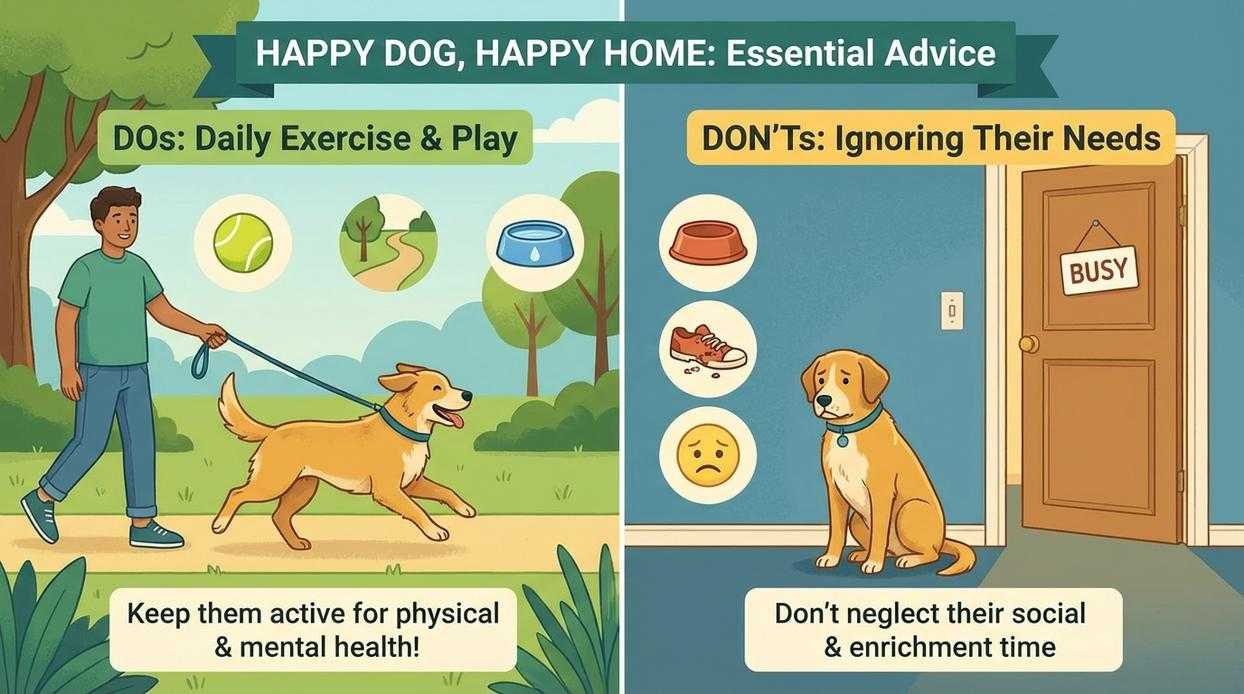
Pillar 2: Beyond the Walk – Exercise and Mental Enrichment
Your dog needs more than a lap around the block.
I know some people say a quick 15-minute walk is enough. They’ll tell you dogs are fine as long as they get outside once or twice a day.
But watch what happens when you follow that advice with a Border Collie or Australian Shepherd.
You come home to shredded couch cushions and holes in your yard. Not because your dog is bad. Because they’re bored out of their mind.
Different dogs need different amounts of exercise. A Cavalier King Charles Spaniel might be content with 30 minutes of gentle activity. A Belgian Malinois? Try two hours minimum (and that’s on a slow day).
Here’s what actually works based on breed type:
- Herding breeds like Border Collies and Aussies need 90 to 120 minutes of vigorous activity
- Sporting dogs like Labs and Golden Retrievers do well with 60 to 90 minutes
- Companion breeds like Pugs and Shih Tzus usually need 30 to 45 minutes
Swimming burns three times more energy than walking according to veterinary studies. Fetch gives you more bang for your buck too. Ten minutes of intense fetch can tire out a high-energy dog faster than an hour-long stroll. For those looking to maximize their dog’s exercise routine, incorporating swimming and fetch, as highlighted in the latest Pet Advice Llblogpet, can significantly enhance their energy expenditure and overall well-being. When it comes to maximizing your dog’s exercise routine, the insights found in Pet Advice Llblogpet suggest that incorporating swimming and intense games of fetch can significantly enhance their physical activity and overall well-being.
But physical exercise is only half the equation.
A tired body without a tired mind still leads to trouble. I’ve seen plenty of dogs who run for miles but still tear up the house because nobody’s challenging their brain.
Mental stimulation matters just as much as physical activity. Puzzle toys make your dog work for their food. Hide treats around the house and let them use their nose to find them (scent work taps into natural instincts). Teaching new tricks keeps their mind sharp.
The Llblogpet Advice for Dogs by Lovelolablog is simple. Mix up your routine. Don’t just walk the same path every day.
Rest matters too though.
Puppies need 18 to 20 hours of sleep daily. Adult dogs need 12 to 14 hours. Push past that and you risk injury or chronic stress.
Watch for heavy panting that doesn’t stop, limping, or a dog who just lies down and refuses to move. Those are signs you’ve overdone it.
Balance is everything.
Pillar 3: Proactive Wellness – Veterinary and Preventive Health
When was the last time you took your dog to the vet?
If you’re scrambling to remember, you’re not alone. Most pet parents I talk to skip annual visits when their dog seems fine.
Here’s the problem with that.
Dogs hide pain really well. By the time you notice something’s wrong, the issue has usually been brewing for months.
Some people argue that yearly vet visits are overkill. They say if the dog is eating and playing normally, why spend the money? Plus, their dog hates going anyway.
I get where they’re coming from. Vet bills aren’t cheap and watching your dog stress out in the waiting room isn’t fun.
But here’s what that thinking misses.
Early detection saves lives. And honestly? It saves money too. Catching a problem early means simpler treatment and better outcomes.
Your dog’s annual check-up isn’t just about vaccines (though those matter). It’s about catching things you can’t see. Dental disease. Heart murmurs. Early signs of kidney issues.
Now let’s talk about the Big Three preventive medications.
Flea and tick prevention keeps your dog comfortable and protects against diseases like Lyme. Heartworm prevention stops a parasite that lives in your dog’s heart and lungs. Regular deworming handles intestinal parasites that can make your dog sick.
These aren’t optional extras. They’re basic protection that every dog needs.
Have you noticed your dog drinking more water than usual? What about sleeping more or eating less?
These subtle changes are easy to brush off. Maybe it’s just the weather or they’re getting older.
But changes in appetite, thirst, energy level, or behavior can signal real problems. If something feels off for more than a day or two, call your vet.
The same goes for advice you’d find in an infoguide for kittens llblogpet. Preventive care works across species.
Your dog can’t tell you when something hurts. You have to watch and listen.
Pillar 4: Essential Upkeep – Grooming and Hygiene
Your dog doesn’t need a spa day every week.
But they do need regular care. And I’m not talking about those Instagram-worthy grooming sessions with bows and bandanas (though if that’s your thing, go for it). While it’s tempting to focus on those Instagram-worthy grooming sessions, true avian care requires a deeper understanding, which is where the invaluable Llblogpet Advice for Birds From Lovelolablog comes into play. …you can find invaluable insights, such as the comprehensive Llblogpet Advice for Birds From Lovelolablog, which emphasizes the importance of understanding your feathered friends’ needs beyond their appearance.
I’m talking about the basics that keep your dog healthy and comfortable.
Brushing and Bathing
Here’s what works. Long-haired breeds need brushing daily. Short-haired dogs? Once a week is fine.
Bathing is where people mess up. You don’t need to do it every week unless your dog rolled in something questionable. Most dogs do fine with a bath every 4 to 6 weeks.
When you do bathe them, use lukewarm water and dog-specific shampoo. Human shampoo throws off their skin’s pH balance.
And here’s a tip: put a rubber mat in the tub. Dogs freak out less when they’re not slipping around like Bambi on ice.
Nail, Ear, and Dental Care
I know these tasks feel scary at first.
Some people say you should just take your dog to a groomer for everything. That it’s too risky to do it yourself. And sure, if you’re genuinely uncomfortable, a professional makes sense.
But here’s what they don’t tell you.
These are skills you can learn. And doing them at home saves you money while keeping your dog calmer (most dogs hate the groomer anyway).
Nail trimming: Cut small amounts at a time. If you see a dark spot in the center of the nail, stop. That’s where the quick starts.
Ear cleaning: Check weekly for redness or weird smells. Use a vet-approved solution and cotton balls. Never stick anything deep into the ear canal.
Dental care: This is the big one people skip. Bad teeth lead to infections that can spread to major organs. Brush your dog’s teeth a few times a week with dog toothpaste. Dental chews help too.
For more pet care guidance, check out Llblogpet Advice for Birds From Lovelolablog.
Your dog won’t thank you out loud for keeping up with grooming. But their wagging tail and better health? That says enough.
Pillar 5: Building the Bond – Training and Socialization
Training isn’t about dominance or showing your dog who’s boss.
It’s about communication.
I remember talking to a frustrated dog owner at a park in Longview last month. She said, “I’ve been yelling ‘sit’ for weeks and he just stares at me like I’m speaking another language.”
That’s because she kind of was.
Positive reinforcement training means rewarding the behavior you want instead of punishing what you don’t. You’re teaching your dog that good things happen when they listen. It works because dogs repeat actions that get them something they value (treats, praise, play).
Some trainers still say you need to be the “alpha” and use corrections. They argue that’s how dogs learn in the wild.
But here’s what they’re missing. Your dog isn’t a wolf. And punishment-based methods often create fear, not understanding.
Every dog needs to know a few basic commands. Sit keeps them calm when guests arrive. Stay prevents them from bolting out the door. Come could literally save their life one day.
Now let’s talk about socialization.
There’s a window between 3 and 14 weeks when puppies are like little sponges. What they experience during this time shapes how they see the world as adults. A puppy who meets friendly strangers and hears car horns and sees other dogs? They grow up confident.
A puppy who stays isolated? They often become anxious or reactive.
One thing I tell people about llblogpet advice for dogs by lovelolablog is that consistency matters more than perfection. If you let your dog on the couch sometimes but not others, you’re just confusing them. Just as consistency is key in providing llblogpet advice for dogs, the same principle applies when consulting the Infoguide for Kittens Llblogpet, ensuring that your feline friends understand and adapt to their environment without confusion. Just as consistency is crucial in providing effective llblogpet advice for dogs, it is equally important when following the Infoguide for Kittens Llblogpet to ensure your feline friends thrive in their new environments.
Training never really ends. It’s not a six-week course and you’re done. Your dog is always learning from you, whether you’re actively teaching or not.
Your Partner in a Lifetime of Happiness
You now have a clear framework to give your dog the best possible care.
Five pillars. That’s all it takes to move beyond the basics and address your dog’s complete physical and mental needs.
This approach does more than keep your dog healthy. It deepens your bond and makes both of your lives better.
Here’s what you should do next: Pick one new tip from each pillar and start this week. Just one small change in each area.
You don’t need to overhaul everything at once. Small steps add up fast.
llblogpet advice for dogs by lovelolablog gives you the tools to make confident decisions about your dog’s wellbeing. We focus on what actually works, not what sounds good.
Your dog depends on you to get this right. Now you know how.
 Zyvaris Vandell writes the kind of health and nutrition for pets content that people actually send to each other. Not because it's flashy or controversial, but because it's the sort of thing where you read it and immediately think of three people who need to see it. Zyvaris has a talent for identifying the questions that a lot of people have but haven't quite figured out how to articulate yet — and then answering them properly.
They covers a lot of ground: Health and Nutrition for Pets, Pet Care Tips and Advice, Pet Product Reviews, and plenty of adjacent territory that doesn't always get treated with the same seriousness. The consistency across all of it is a certain kind of respect for the reader. Zyvaris doesn't assume people are stupid, and they doesn't assume they know everything either. They writes for someone who is genuinely trying to figure something out — because that's usually who's actually reading. That assumption shapes everything from how they structures an explanation to how much background they includes before getting to the point.
Beyond the practical stuff, there's something in Zyvaris's writing that reflects a real investment in the subject — not performed enthusiasm, but the kind of sustained interest that produces insight over time. They has been paying attention to health and nutrition for pets long enough that they notices things a more casual observer would miss. That depth shows up in the work in ways that are hard to fake.
Zyvaris Vandell writes the kind of health and nutrition for pets content that people actually send to each other. Not because it's flashy or controversial, but because it's the sort of thing where you read it and immediately think of three people who need to see it. Zyvaris has a talent for identifying the questions that a lot of people have but haven't quite figured out how to articulate yet — and then answering them properly.
They covers a lot of ground: Health and Nutrition for Pets, Pet Care Tips and Advice, Pet Product Reviews, and plenty of adjacent territory that doesn't always get treated with the same seriousness. The consistency across all of it is a certain kind of respect for the reader. Zyvaris doesn't assume people are stupid, and they doesn't assume they know everything either. They writes for someone who is genuinely trying to figure something out — because that's usually who's actually reading. That assumption shapes everything from how they structures an explanation to how much background they includes before getting to the point.
Beyond the practical stuff, there's something in Zyvaris's writing that reflects a real investment in the subject — not performed enthusiasm, but the kind of sustained interest that produces insight over time. They has been paying attention to health and nutrition for pets long enough that they notices things a more casual observer would miss. That depth shows up in the work in ways that are hard to fake.