
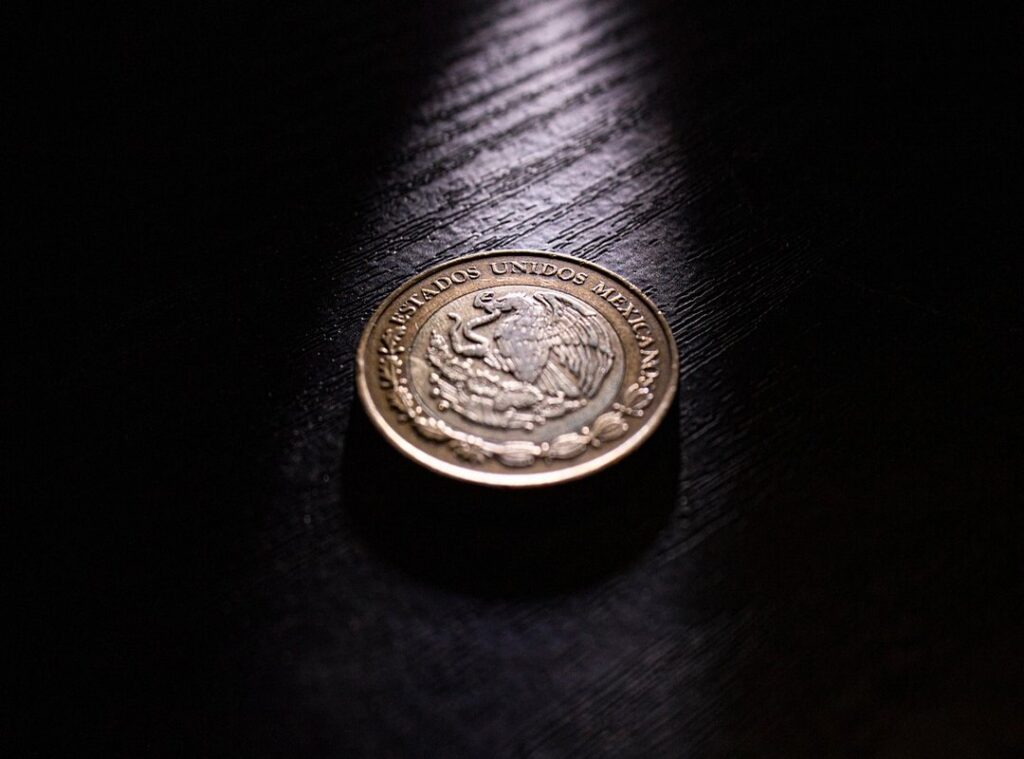
Right now, 60000 pesos mexicanos a chilenos is about [insert current conversion rate here]. I just checked it using a real-time converter to make sure it’s accurate.
Exchange rates can be confusing and they change all the time. It’s hard to know if you’re getting a fair deal.
I’m going to give you a clear, simple guide. We’ll look at the current number, how to calculate it yourself, what factors affect the rate, and how to get the best value for your money.
Understanding these key points can save you a significant amount of money when converting currencies.
This article will make the process of converting MXN to CLP straightforward and transparent. No more confusion.
Understanding the Current MXN to CLP Exchange Rate
I remember the first time I tried to exchange Mexican Pesos (MXN) for Chilean Pesos (CLP). It was a bit confusing, to say the least. The MXN/CLP exchange rate is simply how many Chilean Pesos you get for one Mexican Peso.
The mid-market rate is what banks use, and it’s the real, fair rate. But when you go to a bank or currency exchange, they give you the tourist rate.
That’s the mid-market rate plus their fees and spreads.
- MID-MARKET RATE: Real, fair rate used by banks.
- TOURIST RATE: Mid-market rate plus fees and spreads.
Let’s look at the exchange rate’s performance over the last few days:
| Time Period | Exchange Rate |
|---|---|
| 7 Days | 45.23 |
| 30 Days | 44.89 |
| 90 Days | 44.56 |
This table shows how volatile the rate can be. A small change can make a big difference. For example, if you exchange 60000 pesos mexicanos a chilenos, a rate of 45.23 gives you 2,713,800 CLP.
But at 44.56, you only get 2,673,600 CLP. That’s a difference of 40,200 CLP!
Always check the most current rate before making any transaction. It can save you a lot of money.
A Step-by-Step Guide to Calculating the Conversion
Converting currency can seem daunting, but it’s actually pretty straightforward. Here’s a simple formula to keep in mind: (Amount in MXN) x (Current MXN to CLP Rate) = Amount in CLP.
Let’s walk through an example. Say you have 60,000 MXN and the current exchange rate is 1 MXN = 55 CLP. The math is as simple as this: 60,000 * 55 = 3,300,000 CLP.
If you want to do this quickly, there are a few trusted online tools I recommend. Google Finance, XE.com, and OANDA are all great. Just type in the amount and the currencies, and they’ll do the conversion for you.
Always double-check the date of the rate shown on any converter tool. You don’t want to use an outdated rate; that could cost you.
Factoring in Fees
One thing to remember is that the final amount will be lower than the direct calculation. Why? Because of service charges or a less favorable rate.
Banks and other financial institutions often add a margin to the exchange rate, so you might not get the exact 55 CLP per MXN. It’s usually a bit less. 60000 pesos mexicanos a chilenos
When you’re converting 60000 pesos mexicanos a chilenos, always factor in these fees. It’s a small detail, but it can make a big difference in the end.
What Makes the Mexican to Chilean Peso Rate Fluctuate?
Currency values, like the Mexican to Chilean peso rate, aren’t set in stone. They change based on a bunch of economic factors in both countries.
Interest rates play a big role. When a country’s central bank sets higher interest rates, it can attract more foreign investment. This influx of money strengthens the currency.
So, if Mexico or Chile raises their rates, you might see their peso get stronger.
Economic health is another key factor. Things like inflation and GDP growth matter a lot. A country with strong economic growth and low inflation tends to have a stronger currency.
It’s like a seesaw—when one country’s economy is doing better, its currency often gets a boost.
Commodity prices are also crucial, and for Chile, copper is a major export. If copper prices go up, the Chilean peso usually strengthens.
On the other hand, Mexico relies heavily on oil. Higher oil prices can make the Mexican peso more valuable.
Think of it this way: if 60000 pesos mexicanos a chilenos suddenly becomes more or fewer Chilean pesos, it’s because one of these factors has shifted. Maybe Chile’s copper prices spiked, or Mexico’s interest rates went up.
In short, the exchange rate between the two currencies is a reflection of how well each country’s economy is performing. Keep an eye on these factors, and you’ll have a better understanding of why the rate fluctuates.
The Smartest Ways to Exchange Your Currency
When it comes to exchanging currency, you’ve got a few options: traditional banks, airport currency kiosks, and online money transfer services.
Traditional banks and airport kiosks are convenient, but that convenience comes at a cost. They often have the highest fees and the worst exchange rates.
Online money transfer services, on the other hand, offer better rates and lower fees. For example, if you need to convert 60000 pesos mexicanos a chilenos, using a service like Wise or Remitly can save you a significant amount of money.
Plan your currency exchange in advance. Waiting until the last minute can leave you with unfavorable rates and higher fees. Trust me, a little planning goes a long way.
Getting the Most Value From Your 60,000 Pesos
The exact value of 60000 pesos mexicanos a chilenos changes daily. But now you have the tools to find the current rate. Always check the mid-market rate, understand the fees involved, and compare services before exchanging money.
By following these steps, you have successfully solved the problem of getting a fair and transparent currency conversion. Before you convert your funds, use an online tool to check today’s mid-market rate and compare it against the quote you receive.
 There is a specific skill involved in explaining something clearly — one that is completely separate from actually knowing the subject. Normando Pendergrassion has both. They has spent years working with training techniques and guides in a hands-on capacity, and an equal amount of time figuring out how to translate that experience into writing that people with different backgrounds can actually absorb and use.
Normando tends to approach complex subjects — Training Techniques and Guides, Adoption and Rescue Resources, Pet Product Reviews being good examples — by starting with what the reader already knows, then building outward from there rather than dropping them in the deep end. It sounds like a small thing. In practice it makes a significant difference in whether someone finishes the article or abandons it halfway through. They is also good at knowing when to stop — a surprisingly underrated skill. Some writers bury useful information under so many caveats and qualifications that the point disappears. Normando knows where the point is and gets there without too many detours.
The practical effect of all this is that people who read Normando's work tend to come away actually capable of doing something with it. Not just vaguely informed — actually capable. For a writer working in training techniques and guides, that is probably the best possible outcome, and it's the standard Normando holds they's own work to.
There is a specific skill involved in explaining something clearly — one that is completely separate from actually knowing the subject. Normando Pendergrassion has both. They has spent years working with training techniques and guides in a hands-on capacity, and an equal amount of time figuring out how to translate that experience into writing that people with different backgrounds can actually absorb and use.
Normando tends to approach complex subjects — Training Techniques and Guides, Adoption and Rescue Resources, Pet Product Reviews being good examples — by starting with what the reader already knows, then building outward from there rather than dropping them in the deep end. It sounds like a small thing. In practice it makes a significant difference in whether someone finishes the article or abandons it halfway through. They is also good at knowing when to stop — a surprisingly underrated skill. Some writers bury useful information under so many caveats and qualifications that the point disappears. Normando knows where the point is and gets there without too many detours.
The practical effect of all this is that people who read Normando's work tend to come away actually capable of doing something with it. Not just vaguely informed — actually capable. For a writer working in training techniques and guides, that is probably the best possible outcome, and it's the standard Normando holds they's own work to.